Better Family Photos

  • Subscribe to our RSS feed.
  • Twitter
  • StumbleUpon
  • Reddit
  • Facebook
  • Digg

Wednesday, 7 November 2012

Tamron 70-200 2.8 VC pricing and availability; aims at 70-200 f/4 rivals

Posted on 11:56 by Unknown
NikonRumors reports that pricing for the Tamron 70-200 2.8 VC has been announced at $1499 (from B&H Photo Video), shipping on Nov. 30. I think the price was designed to aim at the Canon 70-200 f/4 IS ($1349) and the recently-announced Nikon 70-200 f/4 VR ($1399 + $199 for tripod collar) So what Tamron is saying is that for about the same price, you could get a lens that is a full stop faster.
Of course the question is whether the 70-200 2.8 VC has comparable image quality at f/4 and has at least a usable image quality at f/2.8. Many photographers who shoot only with first-party lenses may be skeptical of that. As for me, I don't mind using 3rd party lenses (Sigma, Tamron, Tokina) and I haven't seen shots from the Tamron 70-200 2.8 VC but it's possible.
I had the Tamron 17-50 2.8 VC and it was one of my sharpest lenses, even at 2.8 (reviewed here). According to DXO, it outperforms the much more expensive Nikon 17-55 2.8 (which doesn't even have stabilization).
Inline image 1
I also have an upcoming review for the Tamron 70-300 VC. I haven't shot enough with the 70-300 VC yet, but so far it looks quite good. And if you look around for reviews on it, you'll see that it is at least equal to if not slightly better than the Nikon 70-300 VR. Of course there are also Tamron lenses that are not very good compared to their Canon or Nikon equivalents. But my point is, it's at least possible that the Tamron 70-200 2.8 VC may meet or exceed the image quality of the Nikon 70-200 f/4 VR or Canon 70-200 f/4 IS. I will be looking forward to reviews of the Tamron 70-200 2.8 VC.

UPDATE:
Roger Cicala tests the Tamron 70-200 2.8 VC (Canon mount) and the Nikon 70-200 f/4 VR:
http://www.lensrentals.com/blog/2012/12/quick-resolution-tests-on-two-new-70-200s


Review of the Tamron 70-200 2.8 VC for Canon
http://www.photonews.ca/?p=5849
Read More
Posted in | No comments

Tuesday, 6 November 2012

Differences Between Nikon D5200 vs. D5100, D7000 and D90

Posted on 13:57 by Unknown
The Nikon D5200 was officially announced in Europe and is expected to be announced in the US in January.  Here is a list of key differences between the D5200, D5100 and D7000.

UPDATE: DPReview preview here

First, here are the key differences between the D5200 and D5100 (we'll talk about the differences with the D7000 later).
  • SENSOR: The D5200 has a 24mp sensor, which many commentators believe is the same sensor as that of the D3200.  If so, expect the DXO scores to be similar, in which case, the D5100 (which has the same sensor as the D7000) would have slightly better high ISO.  D3200 DXO score.  D5100 DXO Score. D7000 DXO score.  UPDATE: DPReview states that Nikon denies that the D5200 sensor is the same as that of the D3200.  We'll see.
  • Updated! AUTO ISO:  DPReview reports that the D5200 has the new, smarter Auto ISO (just like the D4, D800 and D600) that can take into account the focal length.  On the D600 I have found this incredibly useful, and for me it is a bona fide killer feature.
  • AUTOFOCUS: The D5200 has the same 39-point autofocus module as the D7000.  The D5100 has only 11 AF points.
  • METERING: The D5200 has the same 2016-pixel matrix metering as the D7000.  The D5100 uses the older 420-pixel matrix metering used in cameras such as the D90.
  • CONTINUOUS SHOOTING: The D5200 can shoot at 5 fps, whereas the D5100 shoots at up to 4 fps.
  • VIDEO:  The D5200 can shoot at 1080i/60fps or 1080p/30fps with a built-in stereo microphone.  The D5100 can shoot at up to 1080p/30fps and the built-in mic is mono.
  • WIRELESS SUPPORT:  The D5200 is compatible with the WU-1a wireless adapter, just like the D3200, and similar to the WU-1b for the D600 (reviewed here).  The WU-1a enables remote live view and wireless transmission of photos to your smartphone (for sharing on Facebook or Twitter, etc.).  The D5100 does not have support for the WU-1a or WU-1b.
  • The D5200 has a newer and arguably nicer graphical interface than the D5100.
  • The D5200 is available in black, red and bronze.  The D5100 comes only in black.
 As between the D5200 and D7000, the differences are similar to the differences between the D5100 and D7000:
    • Sensor: see above
    • The D7000 has AF Fine Tuning (Micro AF adjust).  The brochure for the D5200 makes no mention of such a feature and the D5200 is not expected to have it.
    • D5200 has only one command dial.  D7000 has two.
    • D5200 doesn't have direct access buttons for ISO, White balance or file quality (JPEG, RAW, etc.).  You need to go through the menus to change those settings.
    • D5200 has only one memory card slot.  D7000 has two (the second can be used as backup or overflow or for video).
    • 95% viewfinder vs. 100% viewfinder
    • 1/200 sync speed vs 1/250 or 1/320 sync speed
    • highest shutter speed: 1/4000 vs. 1/8000.
    • D5200 doesn't have a commander mode
    • D5200 can't do HSS.
    • D5200 has no built-in AF motor.  Some older lenses will not autofocus on the D5200 (although there may be focus confirmation through the electronic rangefinder).
    • 5fps vs. 6fps continuous shooting
    • 16 scene modes vs. 20 scene modes
  • These are the D5200's advantages over the D7000:
    • Smarter Auto ISO.
    • Support for WU-1a allows remote live view.
    • Swivel/tilt LCD screen.  Can be used for unusual angles or for self-portraits.
    • D5200 can do 1080p at 30fps or 1080i at 60fps.  D7000 can only do 1080p at 24fps.
You might also be comparing the D5200 to a used Nikon D90, or possibly switching from one.  Here are the differences:
  • D5200 has only one command dial.  D90 has two.
  • D5200 doesn't have direct access buttons for ISO, White balance or file quality (JPEG, RAW, etc.).  You need to go through the menus to change those settings.
  • D5200 doesn't have a popup commander mode.
  • D5200 can't do HSS.
  • D5200 has no built-in AF motor.  Some older lenses will not autofocus on the D5200 (although there may be focus confirmation through the electronic rangefinder).
Here are the D5200's advantages over the D90:
  • Smarter Auto ISO.
  • Sensor: The D90 has an older 12mp sensor.  The D5200's sensor is not only higher resolution (24mp) but is expected to have better high ISO performance and dynamic range.
  • Swivel/tilt screen.
  • Autofocus: 39 point vs. 11 point.
  • Metering: 2016pixel vs. 420pixel matrix.
  • Video: the D90 can only do 720p at 24fps.  Plus the D5200 has continuous autofocus in movie mode whereas the D90 does not.  The D5200 also has an external microphone jack whereas the D90 doesn't.
  • Live view autofocus: the D5200's live view autofocus is expected to be much better than the slow-as-molasses autofocus of the D90's live view.
  • 5fps vs. 4.5fps continuous shooting
  • 16 scene modes vs. 5 scene modes
  • Support for WU-1a wireless module.
Unknowns: the D5100 had the ability to take 2 shots and combine them as an HDR.  That feature is not mentioned in the D5200 brochure though it is likely to have it.  Another question is whether the D5200's auto ISO is the smarter type (just like the D4, D800 and D600) that can take into account the focal length.  That's a very useful feature if the D5200 has it (a killer feature in my opinion).  Another potentially useful feature IF present would the ability to specify whether exposure compensation affects flash exposure (just like the D4 and D600).  The D7000 and D90 do not have any of these features.
Pricing: The D5100 is currently being offered refurbished on ebay for as low as $400 (body only).  US Pricing for the D5200 has not yet been announced at the time of this writing.
RELATED POSTS:
Comparison between D5100 and D7000
Comparison between D7000 and D300S
Read More
Posted in | No comments

[Why] Does My Popup Commander Contribute to the Exposure?

Posted on 01:32 by Unknown
One of my favorite features in DSLRs that have it is the popup commander where the popup flash is able to act as wireless commander for off-camera slave flashes.  In this regard, sometimes I see the question, "Does my popup commander affect my exposure?" or "Why does my popup commander affect my exposure even when it is set to inactive?"  The short answers are: yes, even when the popup commander is supposedly inactive, it will contribute to the exposure.  Secondly, that is absolutely normal - there is nothing wrong with your camera.  Below are quick test shots showing that the popup commander does contribute to the exposure.


Here is a test shot at 800 ISO, f/2.8, 1/200, where the slave in Group A was set to TTL at 0 FEC, while the popup flash was set to "--":
D600-4517-201211060135.jpg
You can see that the shadows are not totally black.  The shadows are being illuminated by the popup flash.

Here is the same shot, but this time I used the SG-3IR infrared panel to block the popup flash:
D600-4516-201211060134.jpg
This time you can see that the shadows are black.  Note also the difference in exposure on the mannequin head itself.

The popup flash's contribution is less noticeable when you use lower ISOs and/or narrower apertures.  Here is another pair of test shots, at 400 ISO, f/2.8.
Without SG-3IR:
D600-4518-201211060136.jpg

With SG-3IR:
D600-4519-201211060136.jpg

Here is yet another pair, another stop darker exposure at 400 ISO, f/4 (the TTL compensates so the flash exposure is the same).
Without SG-3IR:
D600-4520-201211060138.jpg


With SG-3IR:
D600-4521-201211060138.jpg

The popup flash's contribution is much less noticeable but is there nonetheless.  Here is the same exposure (ISO 400, f/4) but with the slave flashes intentionally disabled.


Without SG-3IR:
D600-4524-201211060141.jpg


With SG-3IR:
D600-4522-201211060140.jpg

With some subjects that have specular (shiny, mirror-like) surfaces, the popup flash's contribution is even more noticeable, as you can see from the gym bag beside the mannequin head.

As shown above, one solution is to use an SG-3IR infrared panel or similar 3rd party product to block the popup flash.  Another trick is to use high speed sync.  With Nikon, the popup commander can command the slave flashes above the sync speed but the popup flash will not contribute to the exposure.  The downside is that you will lose at least 2 stops of power.

Note: for Canon shooters, the Aokatec panel is designed to be compatible with your hotshoe.

RELATED POSTS:
SG-3IR Infrared Panel Review
Cheap Wireless TTL? Aokatec AK-TTL Review
ND Filter vs. High Speed Sync
Read More
Posted in | No comments

Monday, 5 November 2012

Updated: Tamron Lens Caps (or the Mark II Canon Lens Caps) for Canon Lenses

Posted on 23:33 by Unknown
Tamron Lens Cap vs Canon

Canon lens caps are the worst lens caps (in my opinion) amongst all lens manufacturers, they are flimsy, weak, difficult to install and take off, and incredibly difficult to use with lens hoods because they don't have a that place in the middle where you can hold the lens cap from.

Other manufacturers like Nikon, Tamron, Sigma, Tokina and Sony have similar cap with that middle pinch thingie like the one you see above, when I was shopping for lens caps, I wanted them to be Nikon, they would look contrasty with my Canon gear, but I didn't find all the sizes I wanted. I also liked how the Sony caps looked like, but again, can't find all sizes, and I ended up buying the Tamrons, they are incredibly strong and tight, and I have them for all my lenses, starting from 52mm to 77mm, they are just great.

Canon 60D & Canon 15-85
I still believe the 60D is the sexiest looking DSLR ever, the buttons, the curves, and the slanted top LCD screen. The 15-85 with the lens hood reversed looks pretty good itself.

UPDATE:

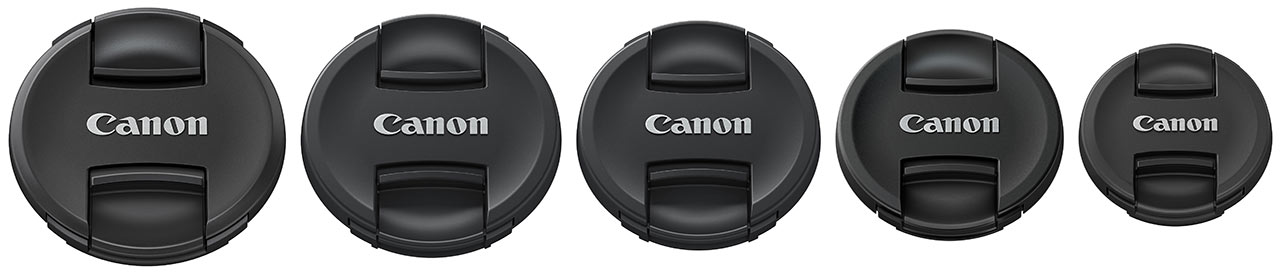
Seems like Canon were listening, check out there new Canon Mark II lens caps, now these look even cooler than the Tamron ones, do you know where can I buy them?

Credit: CanonRumors.com


Posted with BlogsyPosted with Blogsy
Read More
Posted in canon, lens cap, tamron | No comments

Canon 5DIII low light autofocus test

Posted on 07:57 by Unknown
The post re the D600's autofocus performance in low light has been updated to include a couple of autofocus tests with a Canon 5D Mark III, courtesy of MShafik.  Here is the result (it's at the end of the post).
Read More
Posted in | No comments

Nikon D600 DX Crop vs. Nikon D90

Posted on 07:49 by Unknown

Some photographers who currently shoot DX are interested in the Nikon D600 but are wary of the cost of replacing all their DX lenses with FX equivalents right away.  Fortunately, like other Nikon full frame cameras, the D600 can use DX lenses, but the image will be cropped to a DX size (with a resolution of 3936x2924 instead of 6016x4016).  One issue is how the DX-cropped D600 would perform against a DX camera such as a Nikon D90 with respect to high ISO performance.  That's the subject of this post.


THE TEST
I took a test scene that had a mannequin head, fine print text, and textured details of white, black, red, green and blue objects.  I used a Nikkor 24-70 2.8G at 50mm and used an aperture of f/8, with the focus on the text.  To minimize any discrepancies due to focusing error, I focused in live view.  For consistency of light levels I used flash.


I compared 1600 ISO to 6400 ISO.  In addition I tried a simulated comparison at 12800 ISO.  The D90 only goes as high as 6400 ISO in camera.  To simulate 12800 ISO, I underexposed the 6400 ISO by one stop (by reducing the flash to -1 FEC) then adding 1 stop in postprocessing.

For the D600 I took the shot in raw.  For the Nikon D90, I also took the shot in raw but because the D90 has a 12mp resolution compared to the D600's 10mp DX crop resolution, I resized the 12mp image (in raw) down to the same 10mp resolution as the DX-cropped D600, then saved as a TIF.  The files were all imported in Lightroom with default sharpening and no noise reduction.


THE RESULTS
Here is a link to the album where you can download the full resolution photos.  To see the full resolution you need to click on the zoom (magnifying glass) icon, or better yet, download the images.

At the ISOs I tested, the D600 consistently appeared more detailed, although it also had more luminance noise.  Here is a screenshot of a 1:1 comparison of the 1600 ISO samples.
You can see that the texture on the cuff of the green shirt is much more detailed in the D600 sample.

Here are the 3200 ISO samples.

And here are the 6400 ISO samples.

Here are the 12800 ISO samples (in the case of the D90, it is simulated only).
Both have lost fine details but the text appears clearer to me with the D600 sample.

CONCLUSION
From these samples, I conclude that there would be no disadvantage to using the D600 with a DX lens even if cropped, compared to a Nikon D90.  It would be interesting to see a similar comparison with a D7000 (I suspect the D7000 may come out ahead).

11/7/12 UPDATE: web album now includes unresized D90 shots. They do look better than their resized versions and I think they are equal to if not slightly better than the DX-cropped D600 shots. Overall I would still say that using DX lenses on a D600 is feasible. Thanks again to Opt for the suggestion. Btw if you want to compare portions of the image that are on more similar focal planes check out the fabric around (not below) the text.
Read More
Posted in | No comments

Thursday, 1 November 2012

Nikon D600 autofocus with fast subjects in low light

Posted on 13:16 by Unknown
Inline image 1

In response to a comment on the post about the Nikon D600 autofocus, I re-examined the Nikon D600's autofocus performance.


In DigitalRev's comparison between the D600, the D800 and 5DIII, Kai found that the D600's autofocus was frustrating under the conditions he tested. I found that observation surprising, because I've never gotten an impression that the D600's AF was hesitant.  On the contrary, I found that it was able to focus in low light (as low as EV 1) with no issues, and was able to capture fast-moving subjects as well.
Anyway I took some test shots under conditions similar to Kai's to see if the D600 would hesitate.  In Kai's test, he was taking photos of boxers.  The gym had artficial lighting overhead that seemed dim, and a large window that did not appear to be facing the sun.  Kai was using the D600 with the 28-70 2.8G.
Our living room seemed to have the same conditions.  There are patio doors that are similar to a large window, and I turned off lights and just used the TV for artifical lighting.  I took the shots while it was overcast outside, so it was dim.  The light level was around 4 EV (ISO 16,000, f/2.8, 1/320).  I asked my son to strike some poses in his Halloween costume (Chop Chop from Skylanders).  I used the 24-70, focus mode was AF-C, for focus area I tried Auto and single, and I was using focus priority instead of release priority.
Under these conditions, I did observe a delay when I pressed down the shutter.  I would hold the shutter down and the camera would hunt for a second or so before locking focus and releasing the shutter.
Inline image 2

That was the case whether I used Auto Area AF or single AF point.  I don't know yet for sure why there was a delay under those circumstances, and I didn't have time to pin the reason down at that time.
The strange thing is, I continued to use the 24-70 during the rest of the day and took some more shots, but I didn't notice any autofocus hesitation.  I don't think it's because of the mix of artificial lighting and natural lighting.  This following shot had somewhat similar lighting conditions.  The room had artificial lighting overhead, there were a couple of doors that were open and were acting like large windows.  The kids were swinging their swords wildly.  The only difference was that it was brighter (ISO 560, f/4, 1/250, +1.5 EV in posprocessing = around 8.2 EV).
Inline image 5 

Later in the day, I took my son to Disneyland and California Adventure (our daughter was sick so my wife stayed home with her).  Here is a shot where we were on one of the rides at California Adventure, and we were veering left and right, and the light was dim:
Inline image 7

The light was around 2.3 EV (ISO 25,600, f/4, 1/80).  No hesitation.
Here is a shot where it was dim, and the subject (my nephew) was playing around.  I did not note any hesitation either.
Inline image 6

The light levels in that shot were quite low - here is a shot under the same light conditions but without flash showing an EV of 4 (ISO 25,600, f/2.8, 1/500).  (BTW I did not notice any delay for the shot below either).
Inline image 4
I don't know yet the circumstances when there is a delay with the D600.  Low light and an active subject alone are not enough - sometimes.  My hypothesis is that there was no delay in the shots later in the day because I was half-pressing the shutter.  I know that when I go from not pressing the shutter to suddenly fully pressing the shutter and I'm using a wide aperture lens at a close distance to the subject, in low light and with a moving subject, then the camera doesn't take the shot right away (note: I use focus priority).  To be honest, though, I don't think any of my other cameras do that either (I don't recall my D3 being able to do that).  Anyway I will look into this issue further and try to pin it down.

11/6/12 update:  I tried the autofocus in very low light (25600 ISO, f/2.8, 1/60 = EV 1), close to the subject (i.e. shallower DOF).  With the center AF point, the D600 is able to focus without a problem.  With the outer focus points, it sometimes focuses quickly but sometimes hunts (even when I half-press).  Therefore at least one workaround when the D600 hunts in low light is to use the center AF point.

11/5/12 UPDATE:
My co-author MShafik was kind enough to run a test with his Canon 5DIII to see if there would be any delay from autofocusing in low light and shallow depth of field.  Here are his findings:


I did the experiment with the 100 f/2.8 L, the 50 1.4 does not have true USM and thus a bit slower to focus. I switched the AF function to the shutter button (I usually use BBF), switched the camera to manual mode and tried the following scenarios, in each test I focused at a different distance too far from my subject, then focused on my subject, in all scenarios the camera was set to focus priority.

Low Light 1: Exposure: f/2.8, shutter 1/100, ISO 25,600

One shot AF (AF-S in Nikon) - Single Point: fully pressing the shutter, the camera waited until the lens moved to the required distance and fired away, trying to shoot subjects at close distances was immediate, here I was limited with the lens autofocus speed since I was quite far initially. I bet if I was using the 85 1.8 there would be no delay, it is a speed demon.

One shot AF - Auto Area: exact same result, low light has nothing to do with the focus speed, the same would have happened in day light.

AI Servo AF (AF-C in Nikon) - Single Point & Auto Area: Initial focus from one end to the other took less delay, but the subsequent shots (keeping the shutter pressed and moving the lens to different targets) were literally instantaneous, I always have my camera on AI Servo, always.

Low Light 2: Exposure: f/2.8, shutter 1/20, ISO 25,600

Exact same results as above, but with a slightly longer delay in one shot mode.

Conclusion for Canon 5DIII: you could have instantaneous initial focus if the lens didn't have to move a long distance (from one end to the other), or you had a seriously fast focusing lens.

11/8/12 UPDATE: Helpful D600 autofocus tips here.
Read More
Posted in | No comments
Newer Posts Older Posts Home
Subscribe to: Posts (Atom)

Popular Posts

  • Nikon 28 1.8G: Moody Artist?
    When Nikon had its recently-finished sale (now extended to end of March), the one lens that I considered buying was the Nikkor 28 1.8G.  To...
  • Samyang 24 f/3.5 Tilt Shift Lens Now Available
    A seller on ebay ( bestpriceoptics ) is now selling the Samyang 24 f/3.5 tilt shift lens, in Canon and Nikon mounts, for $999 shipped.  This...
  • Double Camera Strap & BlackRapid RS-5 Review
    This is a review of two camera straps: - The first is a double camera strap that's -- let's be blunt -- a knockoff of the BlackRapid...
  • Olympus E-PL3 with 14-42 Lens $199; Moving from Nikon to MFT?
    I saw on 43rumors.com that the Olympus E-PL3 was being sold at Newegg for just $199 with the 14-42 kit lens included.  I checked it out and...
  • Price drops!!! Olympus XZ-2, Pentax MX-1. And about the Casio EX-10
    I just noticed a huge price drop on the Olympus XZ-2 (previously $500 now under $400) and Pentax MX-1 (previously $500 now under $300 ).  Pe...
  • Abstract Fun
    In one of the rare times I put effort and setup a light stand and an umbrella to shoot my girls, I decided to make use of this burst of ener...
  • Best Alternative to Nikon 24-70 2.8G: the Nikon 28-70 2.8D
    Every Nikon shooter knows that the Nikkor 24-70 2.8G is the best standard zoom for Nikon's full frame cameras.  However, at around $1900...
  • Coco Ring Flash - First Impressions
    A few weeks ago, after much deliberation, I finally decided to get a ring flash adapter.  My purpose was to use it as on-axis fill, much lik...
  • Sigma 18-35 1.8 Revisited; Where to Get It
    Back in April of this year, Sigma surprised everyone by announcing the Sigma 18-35 f/1.8 , the first zoom lens for a large sensor that had s...
  • Toys for the Big Kids: Speedlight Softbox
    In this post, we will have a look at a softbox for speedlights.  This post is part of a series that will cover equipment reviews for committ...

Categories

  • "alien bee"
  • "april fool's"
  • "ring flash"
  • "yong nuo"
  • 1"
  • 1/1.7"
  • 10-17
  • 10-20
  • 11-16
  • 15-85mm
  • 15z
  • 17-50 vc
  • 190cx pro3
  • 2.8
  • 2.8G
  • 2/3"
  • 200 f2.8
  • 200 L
  • 200mm
  • 200mm f/2.8
  • 200mm f/2.8 L II
  • 200mm f2.8
  • 200mm f28
  • 200mm f28 L II
  • 2012
  • 2013
  • 23 Samsung led
  • 24-105 f4
  • 24-70
  • 25 1.4
  • 28-105
  • 28-70
  • 35mm
  • 35mm f/2
  • 35mm f2
  • 360
  • 3rd party
  • 4.1
  • 4/3
  • 40 pancake
  • 40 panckae
  • 40 stm
  • 40-150R
  • 40mm f/2.8
  • 430EX
  • 43rumors
  • 45 18
  • 45 AW
  • 4x4
  • 50 14
  • 50 f14
  • 50-150
  • 50mm
  • 50mm f/1.4
  • 55 AW
  • 55-250
  • 550D
  • 55aw
  • 560ex
  • 580 ex ii
  • 580EX
  • 580EX II
  • 5d
  • 5d mark 2
  • 5d mark 3
  • 5D Mark II
  • 5d mark iii
  • 5d2
  • 600d
  • 600ex-rt
  • 60d
  • 60fps
  • 60mm macro
  • 650d
  • 6d
  • 7.5mm
  • 720p
  • 75 f1.8
  • 85mm f1.8
  • 8x12
  • abbc
  • abstract
  • accuracy
  • active d-lighting
  • adjustment
  • adl
  • AF
  • af point
  • AF Point Expansion
  • aftermarket
  • airport
  • alexandria
  • alien bee
  • alien bees
  • alienbee
  • alienbees
  • alternative
  • ambient
  • ambient light
  • angle
  • aperture priority
  • APS-C
  • apsc
  • assignment
  • auto focus
  • auto white balance
  • autofocus
  • AWB
  • awl
  • back button focus
  • background
  • background blur
  • backlight
  • backlighting
  • backlit
  • bad behavior
  • bad photography
  • balance
  • bare flash
  • battery
  • BBF
  • beach
  • beams
  • beauty dish
  • bellagio
  • BFT
  • birthday
  • black
  • black foamie thing
  • black rapid
  • blackrapid
  • blogs
  • blower
  • blown
  • blur
  • bokeh
  • bounce
  • bounce card
  • bounce flash
  • bower
  • bracket
  • brightness
  • brilliance
  • brolly grip
  • brother
  • build
  • burst mode
  • butterflies
  • butterfly
  • C.Fn
  • cable
  • cake
  • camera
  • camera bag
  • camera releases
  • camera settings
  • candle
  • candlelight
  • canon
  • Canon 100mm Macro L IS
  • canon 200mm f28L
  • canon 24-105
  • canon 40 stm
  • canon 40mm f28 pancake
  • canon 50
  • canon 50 1.4
  • canon 55-250
  • canon 5d mark 2
  • canon 5d mark ii
  • canon 5d mark iii
  • canon 5d2
  • canon 5d3
  • Canon 60d
  • canon 6d
  • canon g11
  • canon speedlite
  • car
  • carbon fiber
  • catch lights
  • cheap
  • christmas
  • clean
  • cleaning
  • clipped
  • clipping
  • close up
  • clouds
  • cls
  • clustered
  • color
  • compact
  • comparison
  • composition
  • compositional aid
  • construction
  • contrast
  • cooler master
  • copyright
  • core i7
  • cowboy
  • cowboystudio
  • cpl
  • creepy
  • crop factor
  • crop sensor
  • cyber commander
  • cybersync
  • d-lux
  • d-lux5
  • d3
  • d300
  • D5100
  • D600
  • d70
  • d700
  • D7100
  • d90
  • dark background
  • david hobby
  • daylight
  • dell 24 inch
  • depth of field
  • desert
  • diamond
  • digital
  • directional
  • distance
  • diy
  • dlux
  • dlux5
  • dng
  • double
  • dslr
  • DSLR bag
  • dual
  • dust
  • dx
  • dynamic range
  • earthquake
  • ebay
  • ebay trigger
  • eclipse
  • editing
  • EF 40mm f/2.8
  • ef-s 60mm
  • einstein
  • Electro GN
  • engagement
  • environmental portrait
  • ep5
  • equipment
  • ETTL
  • ettr
  • europe
  • events
  • evf
  • ex600
  • existing light
  • expensive
  • exposing to the right
  • exposure
  • f/3.5
  • family
  • faq
  • fasten-r3
  • favorite
  • fayoum
  • Fayoum desert
  • fill
  • fill light
  • film
  • filter
  • finepix
  • fire
  • fireplace
  • first impressions
  • fish-eye
  • fisheye
  • fix
  • FL600R
  • flash
  • flash bounce
  • flash sync
  • flash trigger
  • flashmeter
  • flashright
  • focal length
  • focus
  • food
  • football
  • fotodiox
  • fountain
  • freexwire
  • fuji
  • fujifilm
  • Full Frame
  • fun
  • fx
  • galaxy s 3
  • galaxy s4
  • gecko
  • GeForce gtx570 OC
  • gel
  • geomag
  • ggs
  • ghost
  • gigabyte z77 ud3h
  • glass
  • gn
  • Goodbye
  • gorillapod
  • gregg
  • grid
  • grip
  • group shot
  • gskill ripjaws
  • guide
  • guide number
  • gx7
  • haf 912
  • handheld
  • hands on
  • hands-on
  • hdr
  • head shot
  • hiatus
  • high dynamic range
  • high iso
  • high speed sync
  • highlight
  • highlights
  • histogram
  • holder
  • holiday
  • home
  • home made
  • Honda civic
  • honeycomb
  • hotshoe
  • hoya
  • humor
  • i9500
  • id
  • image quality
  • impressions
  • indoor flash
  • infrared
  • infringement
  • insects
  • inverse square law
  • japan
  • jewel
  • jewelry
  • joby head
  • jpeg
  • Kingston hyperX SSD
  • kirk tuck
  • kl bird park
  • krakow
  • kuala lumpur
  • las vegas
  • lastolite
  • laurence kim
  • lax
  • lcd
  • leica
  • lens
  • lens cap
  • lens compression
  • lens review
  • lenses
  • lenspen
  • lensrentals
  • light
  • light painting
  • lighting
  • lightroom
  • lightroom 4
  • lightroom 5
  • location
  • long
  • long exposure
  • los angeles
  • low key
  • low light
  • Lowepro
  • Lowepro 45aw
  • Lowepro 55aw
  • lr4
  • lumiquest softbox III
  • lumix
  • lx-5
  • lx5
  • m4/3
  • m43
  • macro
  • macro adapter
  • makernotes
  • malaysia
  • manfrotto
  • manfrotto tripod
  • manual
  • mark ii
  • mark iii
  • MFT
  • mft. micro four thirds
  • micro four thirds
  • mielec
  • migration
  • mini review
  • mirror
  • mirror-less
  • mirrorless
  • mobile
  • modification
  • modifier
  • monobloc
  • monoblock
  • monolight
  • motion
  • motion blur
  • multi function printer
  • multiple
  • nano crystal
  • natural light
  • neil
  • Neil VN
  • niekerk
  • nikkor
  • nikon
  • nikon d600
  • noise
  • off camera
  • oil
  • olympus
  • olympus 12-50
  • Olympus 40-150
  • olympus 45
  • olympus 45 18
  • olympus om-d em-5
  • om-d
  • omd
  • omd em1
  • omd em5
  • omd em6
  • on-camera
  • one inch
  • overexposure
  • overpowering sun
  • panasonic
  • panasonic leica 25 14
  • pancake
  • party
  • passport
  • pastries
  • pastry
  • pc
  • pentax
  • peter
  • phone
  • phone photography
  • photo
  • photo tips
  • photography
  • photokina
  • photomerge
  • photoshop
  • photoshop elements
  • planning
  • pocketwizard
  • point and shoot
  • poland
  • polarizer
  • popup
  • popup flash
  • portrait
  • post processing
  • post-processing
  • postprocessing
  • product
  • product shots
  • profile
  • protection
  • protector
  • quad-flash
  • quantum
  • radiopopper
  • raid 0
  • Range finder
  • raw
  • raw editing
  • raw+jpeg
  • rays
  • real
  • recovery
  • reflection
  • reflector
  • resources
  • restaurant
  • review
  • rf-603
  • rf603
  • ricoh
  • ring
  • ringflash
  • robin wong
  • roger cicala
  • rogue
  • rokinon
  • roll off
  • roll-off
  • rolloff
  • rs-5
  • rs-7
  • rumors
  • s5
  • s5 pro
  • s5pro
  • samples
  • samsung
  • samyang
  • sb-26
  • sb-80
  • sb26
  • sb800
  • screen protector
  • sensor
  • sensor swab
  • sensorclear
  • sensorklean
  • sensorklear
  • separation
  • shadow
  • shadow pulling
  • shadows
  • shards
  • sharpening
  • sharpness
  • shoot through
  • shoot-through
  • shoot-thru
  • shooting technique
  • shootout
  • short
  • sigma
  • sigma 50-150
  • skin tones
  • skylight
  • Slik Mini Tripod
  • slingshot
  • slow
  • small
  • smooth
  • soft
  • softbox
  • sony
  • sony a99
  • sony rx100
  • sony t10
  • specular
  • speed
  • speedlight
  • speedlite
  • spinlight
  • spots
  • standard
  • stockholm
  • story
  • strap
  • strobe
  • strobist
  • studio
  • studio strobe
  • subject
  • substitute
  • sudden
  • summilux
  • sunrise
  • sunset
  • sweden
  • swivel
  • sync speed
  • t2i
  • t3i
  • Table top tripod
  • tamron
  • technique
  • techniques
  • tele
  • telephoto
  • thinktank retrospective 5
  • third party
  • tips
  • tokina
  • tonal
  • tonality
  • tone curve
  • toploader
  • toys
  • translucent
  • travel photography
  • tri-flash
  • Tribute
  • trifold
  • trigger
  • tripod
  • truth
  • ttl
  • TTL Cord
  • u43
  • ultra-wide
  • ultrawide
  • umbrella
  • underexposure
  • unlimited sync speed
  • up-rise
  • up-rise 15z
  • update
  • uprise
  • USM
  • uv
  • uwa
  • vanguard
  • versus
  • vertical
  • video
  • view nx2
  • visual science lab
  • vs
  • wadi rayan
  • wd caviar black
  • web
  • weekend
  • westin
  • white balance
  • white lightning
  • wide
  • wide angle
  • window
  • wireless
  • wireless flash
  • wireless release
  • wireless trigger
  • workflow
  • Yashica
  • yashica gtn
  • yashica st-7
  • yn-560
  • yn-560ex
  • yn-ex600
  • yn560
  • yong nuo
  • yongnuo
  • zack arias
  • zoom
  • zoom toploader
  • zuiko

Blog Archive

  • ▼  2013 (165)
    • ▼  December (5)
      • Olympus E-PL3 with 14-42 Lens $199; Moving from Ni...
      • Sigma 18-35 1.8 Revisited; Where to Get It
      • Speedlight Modifiers - 50% discount at Fotodiox
      • Olympus M.Zuiko 45mm f/1.8 Mini Review
      • Evening Portraits with Flash
    • ►  November (10)
    • ►  October (8)
    • ►  September (7)
    • ►  August (3)
    • ►  July (11)
    • ►  June (10)
    • ►  May (15)
    • ►  April (19)
    • ►  March (33)
    • ►  February (24)
    • ►  January (20)
  • ►  2012 (193)
    • ►  December (17)
    • ►  November (22)
    • ►  October (34)
    • ►  September (47)
    • ►  August (12)
    • ►  July (11)
    • ►  June (10)
    • ►  May (13)
    • ►  April (13)
    • ►  March (8)
    • ►  February (1)
    • ►  January (5)
  • ►  2011 (141)
    • ►  December (8)
    • ►  November (8)
    • ►  October (7)
    • ►  September (9)
    • ►  August (13)
    • ►  July (13)
    • ►  June (19)
    • ►  May (17)
    • ►  April (25)
    • ►  March (22)
Powered by Blogger.

About Me

Unknown
View my complete profile