Better Family Photos

  • Subscribe to our RSS feed.
  • Twitter
  • StumbleUpon
  • Reddit
  • Facebook
  • Digg
Showing posts with label nikon. Show all posts

Saturday, 26 October 2013

2013: The Camera Year

Posted on 16:25 by Unknown

Blockbuster

This year has witnessed an incredible range of very interesting camera releases (can you guess how many?), there are a lot of tidal shifts in the market, players that are becoming stronger, and others that are referred to as stagnant and old fashioned. I am not attempting to analyze the market and company strategies in this post, instead I will be thinking aloud, analyzing what is going on around, what to do regarding any further camera purchases, and where to head to. The more I think about the new camera releases in 2013, the more I get confused, so I decided to get a white paper and a pen, and jot it all down so I can be able to make a clear analysis. Hit the jump to continue reading, and be astounded with the sheer amount of cameras released in 2013.

Before I begin though, one word about the opening picture, this is my niece in the foreground, and my daughter at the back. I have been trying to emulate movie images and posters recently (as a result of seeing some beautiful cinematic-looking images, but more about that later), and this was one of my favorites. I will be posting another one midway.

Back to the cameras. I headed over to the internet to find out what cameras have been released this year, and I found dpreview's camera releases timeline very helpful, so this is where I started. I decided to skip any camera with a sensor smaller than 1/1.7" (the one found in Canon's G and S series cameras), so what you're going to see below are cameras with the following sensor sizes: (1/1.7", 2/3", 1", Micro Four Thirds, APS-C, Full Frame). I will write a very short description beside each camera, so here goes.

P.S. Cameras are sorted in ascending order by the release date, starting from Jan 2013 till Oct 2013.
P.P.S. ILC = Interchangeable Lens Camera, usually goes with a mirror-less compact camera.


  1. Samsung NX300 (APS-C, 20MP, ILC, no VF)
  2. Fuji X100S (APS-C, 16MP, 23mm f/2 fixed lens, hybrid VF)
  3. Fuji X20 (2/3", 12 MP, 28-112mm f/2-f/2.8 fixed lens, OVF)
  4. Nikon 1 S1 (1", 10 MP, ILC, no VF)
  5. Nikon 1 J3 (1", 14 MP, ILC, no VF)
  6. Sony NEX 3N (APS-C, 16MP, ILC, no VF)
  7. Sony SLT A58 (APS-C, 20MP, DSLT, EVF)
  8. Nikon D7100 (APS-C, 24MP, DSLR, OVF)
  9. Nikon Coolpix A (APS-C, 16MP, 18.5mm f/2.8 fixed lens, no VF)
  10. Canon 700D (APS-C, 18MP, DSLR, OVF)
  11. Canon 100D (APS-C, 18MP, tiny DSLR, OVF)
  12. Panasonic GF6 (MFT, 16MP, ILC, no VF)
  13. Samsung NX1100 (APS-C, 20MP, ILC, no VF)
  14. Ricoh GR (APS-C, 16MP, 18,3mm f/2.8 fixed lens, no VF)
  15. Panasonic LF1 (1/1.7", 12MP, 28-200mm f/2-f/5.9 fixed lens, lousy EVF)
  16. Panasonic G6 (MFT, 16MP, ILC, EVF)
  17. Samsung NX2000 (APS-C, 20MP, ILC, no VF)
  18. Olympus E-P5 (MFT, 16MP, ILC, no VF)
  19. Leica X Vario (APS-C, 16MP, 28-70mm f/3.5-f/6.4 fixed lens, no VF)
  20. Pentax K-500 (APS-C, 16 MP, DSLR, OVF)
  21. Pentax K-50 (APS-C, 16 MP, DSLR, OVF)
  22. Pentax Q7 (1/1.7", 12MP, 23-69mm f/2.8-f/4.5 fixed lens, no VF)
  23. Galaxy NX (APS-C, 20MP, ILC, EVF, Android OS)
  24. Fuji X-M1 (APS-C, 16MP, ILC, no VF)
  25. Sony RX100 II (1", 20MP, 28-100mm f/1.8-f/4.9 fixed lens, no VF)
  26. Sony RX1R (Full Frame, 24MP, 35mm f/2 fixed lens, no VF)
  27. Canon 70D (APS-C, 20MP, DSLR, OVF)
  28. Panasonic GX7 (MFT, 16MP, ILC, great EVF)
  29. Canon G16 (1/1.7", 12MP, 28-140mm f/1.8-f/2.8 fixed lens, lousy OVF)
  30. Canon S120 (1/1.7", 12MP, 24-120mm f/1.8-f/5.7 fixed lens, no VF)
  31. Sony NEX 5T (APS-C, 16MP, ILC, no VF)
  32. Sony Alpha A3000 (APS-C, 20MP, ILC, poor EVF)
  33. Sony QX100 (1", 20MP, 28-100mm f/1.8-f/4.9 fixed lens, no VF, mobile phone add-on)
  34. Olympus OM-D EM-1 (MFT, 16MP, ILC, best EVF)
  35. Fuji X-A1 (APS-C, 16MP, ILC, no VF)
  36. Nikon 1 AW (1", 14MP, ILC, no VF, waterproof)
  37. Pentax K-3 (APS-C, 24MP, DSLR, OVF)
  38. Nikon D610 (Full Frame, 24MP, DSLR, OVF)
  39. Sony RX10 (1", 20MP, 24-200mm f/2.8 fixed lens, EVF)
  40. Sony A7 (Full Frame, 24MP, ILC, EVF)
  41. Sony A7R (Full Frame, 36MP, ILC, EVF)
  42. Panasonic GM1 (MFT, 16MP, ILC, no VF, tiny)
  43. Nikon D5300 (APS-C, 24MP, DSLR, OVF)
  44. Fuji XQ1 (2/3", 12MP, 25-100mm f/1.8-f/4.9 fixed lens, no VF)
  45. Fuji X-E2 (APS-C, 16MP, ILC, great EVF)
Olympus Stylus (1/1.7", 24-300mm fixed lens, EVF)?
Nikon DF (Digital Fusion) Hybrid (Full Frame, OVF, F-Mount, D600 AF)?


Can you believe that? 45 new cameras with large sensors released till now, and there are still two full months remaining in 2013. The rumors about the new Nikon full frame compact, and the Olympus Stylus are almost confirmed, it's just a matter of time, we'll see them in November.

Now let us do some quick stats, out of 45 new cameras:
  • 10 have mirrors (DSLR/DSLT), 21 mirror-less ILCs, 14 fixed lens compacts (except for the RX10).
  • 4 have Full Frame sensors, 23 have APS-C sesnors, 6 have MFT sensors, 6 have 1" sensors, 2 have 2/3" sensors, 4 have 1/1.7" sensors.
  • The most common APS-C sensors are 16MP (variance from 16MP to 24MP).
  • 23 have built-in view finders, 11 of them are optical (9 DSLRs + Fuji X20 + Canon G16), and 12 are electronic.
  • A handful of the ones without a built-in VF have the option of an accessory EVF, or even an accessory OVF (Sony RX1R).

Cinema Style?

And now is the time for some quick thoughts on a few select cameras and systems, this is where I think in a loud voice.

1/1.7" AND 2/3" SENSORS

These cameras were great and sought after two years ago, maybe even one year ago. But with today's tiny and much larger sensor cameras (RX100, Olympus PEN, Panasonic GM1, fixed lens APS-C or FF like the Nikon Coolpix A or the Sony RX1), they are not the rave anymore. Don't get me wrong, they still produce great images, and with a camera like the Canon G16 with a fixed f/1.8-f/2.8 zoom lens, it is a great choice. There are people (even proffesionals) that still buy them and use them, but for me, having owned a G11 and used it's RAW files, they are behind the larger sensors.


FIXED LENS APS-C OR FULL FRAME

Doesn't make sense to me because of the 35mm equivalent focal length, no matter how great the camera and the lens are. I said before that I wish Sony made their RX1 with a 50mm f/1.4 lens, and that would be something I'd buy and use exclusively (I know I can sort of do this with the A7 and the Zeiss 55 f/1.8, but I'll keep this discussion for later).

Famous cameras in this category are the Fuji X100/S, Sony RX1/R and to a less degree, the Nikon Coolpix A and the Ricoh GR. However they make sense to street photographers and people who make use of such a wide focal length, not me.


DSLR CAMERAS

After living with the OM-D EM-5 and great small lenses for almost a year, I have lost all feelings and attractions towards DSLRs. Whenever I handle my brother's 60D, it feels too big and bulky, and when I don't see the playback of the picture in the viewfinder, I am a little taken back, when I don't see the blinking highlights and blocked shadows when composing, it feels ancient.

That's not to say that I don't miss my 5D Mark III when I'm shooting my running kids and the EM-5 fails to track them, or when I want to completely eradicate a busy background with the 50mm f1/.4 lens. As I see it now, the main attractions for DSLRs is that they are getting better and better sensors, they have a huge range of established lenses to pick from, they produce great video footage, and they are becoming more affordable at the same time. Canon's 100D is a good try in providing the DSLR experience but in a small package.

As I see it now, MFT sensors are competing with APS-C sensors image quality wise, they are not behind anymore, and the DOF difference is not really that different, and most MFT prime lenses have exceptional image quality starting from wide-open. That puts an APS-C DSLR out of my radar forever. However, that being said, the falling prices of full frame DSLRs, along with the increasing prices of high-end MFT cameras are really appealing. Assuming that size and weight are not an issue, wouldn't you be inclined to get a $1,400 Nikon D600 or a $1,500 Canon 6D over the $1,400 Olympus OM-D EM-1? Just for that full frame look? Tough choice.


FUJI X, SONY NEX AND SAMSUNG NX (ALL APS-C CAMERAS)

Great performers, great image quality, interchangeable lenses and comes in a small package. What's not to like? The lens line-up, that's what. Fuji has produced very good lenses, and are doing good work developing more, but right now, there are like 5 lenses, and if they don't cover what you need you're out of luck. The Fujis also have that famous X-Trans sensor, the internet says it has very high quality, but there are RAW issues when used with Adobe's Camera RAW engine, which is what I use for 100% of my photos.

The same lack-of-lenses argument goes for the Sony NEX, I've been following Kirk Tuck's adventures with the NEX series (BTW, he sold all of them after a long love story), and before I decided on buying my EM-5, I was really considering the NEX 6 (as it was the cheapest one with an EVF), but the lack of lens choices, the weird flash hot-shoe compatibility issues and my general feeling that Sony won't be in a hurry to improve the issues, I decided to head to MFT instead. And now Sony have ditched the NEX series completely.

As for the Samsung NX, funny enough, Kirk Tuck is testing them out for us, he's the one who brought it to my attention. I didn't notice before that Samsung had an APS-C interchangeable lens camera. He tested the finder-less NX300 and the Android powered Galaxy NX, and is reporting they have great image quality, and that the 18-55mm kit lens is very good. However, lens choices for these cameras are very limited, and quite expensive in my opinion. I had a chance to shoot a friend's NX1000 with the kit lens, and it is erm.. bad.


SONY A7/R FULL FRAME MIRRORLESS GOODNESS

Sony is a mega electronics company, and they used to make (still make) great weird gadgets, I have always lusted after their products in the 80s and the 90s. So when they came up with the RX1 35mm f/2 fixed lens full frame camera, the internet went berserk, and despite the lack of a built-in VF and the astronomical $2,800 price, it sold very well and was praised in the reviews.

And now they've done it again. What was the hottest ILC camera on the internet a few months back? The Olympus EP-5 with the exceptional VF-4 viewfinder. Then Panasonic released the cheaper, better looking, tilt-able EVF GX7, and the EP-5 sort of went down the drain, as if it was never announced, I can't remember reading a blog about the EP-5 one month after the GX7 release. Next comes the $1,400 Olympus EM-1 and the whole world applauds, but the GX7 didn't have anything to fear because of the $400 price differential. A lot of people pre-ordered the EM-1.

Then Sony comes a little late to the party, bag in hand, shows everyone two full frame mirrorless cameras that are the same size as the Olympus EM-5 and (sorry for the expression) pisses on the party, or at least that's how it felt when they announced the $1,700 and $2,300 prices for the 24MP A7 and the 36MP A7R respectively. The internet went even more berserk, people were cancelling their EM-1 orders, and pre-ordering the Sonys.

For $300 more than an EM-1 you can get a full frame mirrorless camera that is smaller in size, has a built-in VF that is quite good. Who wouldn't want that? The crazy thing is that the entry prices are much much cheaper than the big boy full frames, the Canon 5D3 and the Nikon D800, and the 24MP A7 is even cheaper than bot the Canon 6D and the Nikon D610! Want to know a more crazy thing? The Sony A7 plus either the Zeiss 35mm f/2.8 or 55mm f/1.8 is cheaper than the Sony RX1R. And when Sony released the A7, it claimed that it focuses much faster than the RX1R, now that's a company that's innovating, not afraid of competing with its self and not crippling it's own products to make you buy another of its products.

So after all this gushing, am I going to buy one? Nope, won't happen I'm afraid. For starters, it is a very new product that is not available yet, and is destined to create a huge tidal wave in the market, during which I would prefer to be eating popcorn and watching the market go crazy. Then there are the lenses, the only interesting one right now is the $1,000 55mm f/1.8 Zeiss, I'd rather wait and see, remember, it's Sony we're talking about here, they have no issues killing or creating a whole eco-system whenever they feel like it. And then there's the Nikon DF that shall be announced by the 6th of November, the key advantage I see here is the F-Mount, with all their lenses available for immediate use. We'll see.


MICRO FOUR THIRDS

And I finally reach my current system of choice. The EM-5 is serving me really well, and I'm extremely happy with the images I am getting, if you haven't seen my 43rumors article, please do, it is the perfect summary of how I feel about the MFT compared to owning APS-C and FF DSLRs.

I have posted before about the GX7, and my expectations from the EM-1 before, so I'm not going to repeat them, but I've not commented on the EM-1 yet. I still have doubts about the looks of the EM-1 leather finish (top view looks even sexier than the EM-5 though), it just looks odd in the photos or the videos I've seen, maybe it looks better in hand, but that will have to be a leap of faith. I have promised myself since the day I bought my EM-5 and discovered the faulty eye-sensor that I would buy it's successor. The EM-1 is not the EM-5's direct successor, and at $1,400, it is expensive for a MFT camera, so I am not yet sure I am ready to buy one, especially with all the shifting in the market. Maybe the $1,700 full frame Sony A7 will force the EM-1 to lower its price? I have a feeling that Olympus might quickly drop $200 from the EM-1's price after the holidays, or even earlier, but that's just a hunch based on zero facts.

As for why I'd want an EM-1, here are the reasons in the order of their importance:
  1. Focus tracking that works, and 6.5 fps with continuous focus, 10 fps without.
  2. The best EVF ever, detailed, true colors, large magnification (same as FF DSLR).
  3. Better ergonomics and customizable buttons.
  4. Wi-fi, would be very useful during product shoots, where I can show the pictures on my iPad immediately.
  5. Better video options, mic input, levels, someone said you can touch to focus during recording.
  6. Better LCD resolution, the EM-5 weakness appears at 100% magnification.
  7. Larger buffer, the EM-5 gets filled up in two seconds after a 9 fps burst.
  8. Better IBIS and focusing speed.
  9. Slightly better image quality.
So, unless sudden GAS hits me (with my friend traveling to NYC mid-November, it might just happen), I won't be getting the EM-1 that soon. We should hear about an EM-5 successor next year.


Now that I've said all I have, what do you think?

P.P.P.S. I have not had time to proof-read the post, so please excuse any mistakes, it took me a long time to prepare and write this post.
Read More
Posted in 1", 1/1.7", 2/3", 2013, apsc, camera releases, canon, fuji, Full Frame, leica, MFT, micro four thirds, nikon, olympus, one inch, panasonic, pentax, ricoh, samsung | No comments

Friday, 22 March 2013

Nikon D600 vs. Nikon D7100 comparison (daylight)

Posted on 05:53 by Unknown
While I'm still analyzing the D600 and D7100 low light shots, here are more comparison shots between the D600 and D7100, this time in daylight.  For this test, I used the Sigma 35 1.4 on the D7100 and the Tamron 28-75 (at around 52mm) on the D600.  I know, your first reaction is that it's not a fair comparison because the Sigma is considered one of the sharpest lenses, whereas the Tamron is sharp in the center but it's not in the same league.


Nonetheless, I believe the "perceptual megapixels" of the two combinations is probably very close:
Nikon D600 + Tamron 28-75 = 12 Pmp.
Nikon D7000 + Sigma 35 1.4 = 11 Pmp.
Nikon D7100 + Sigma 35 1.4 = ?? Pmp.  My guess is it's not much higher than 11 (see why here -- under "Sharpness").

To keep the comparison more fair, I suggest looking primarily at the center area of each shot (the Tamron loses sharpness as you move toward the edges and corners).

Regarding the shooting conditions, the sky was cloudy and the sun was moving in and out of the clouds, hence the difference in exposures.  BTW you'll notice in the EXIF that the D7100 files are from the "D5200".  That's because I had to change the metadata to import them into Lightroom (see here).

Anyway here are the shots (full resolution available):

SET 1:
D7100-0130-201303141559.jpg
d7100
D600-9466-201303141600.jpg
d600


SET 2:

D7100-0127-201303141555.jpg
d7100

D600-9462-201303141557.jpg
d600


SET 3:

D7100-0121-201303141552.jpg
d7100
D600-9457-201303141554.jpg
d600


SET 4:

D7100-0120-201303141551.jpg
d7100
D600-9456-201303141553.jpg
d600


SET 5:
D7100-0117-201303141545.jpg
d7100
D600-9451-201303141547.jpg
d600


OBSERVATIONS:
Sharpness.  To me, the sharpness looks about evenly matched.  This is not expected for an APS-C camera, which usually is less sharp than a full frame camera, all other factors being equal (see here). Of course, the lens makes a huge difference here.  If I had used a better lens on the D600, such as the Nikon 24-70, the D600 shot would have looked sharper (the Tamron is nowhere close to maximizing the D600's sensor).

Tonality.  The tonality is quite different between these two cameras.  The highlights on the D7100 are brighter and the shadows in the D600 are deeper, even on shots with identical exposures.  Initially I thought it could be the change in light conditions, but the pattern is very consistent and the sharpness of the shadows are identical which implies that the light conditions were the same.  Plus, if it's due to the change in light conditions, I would think that the D7100 shot sometimes shows the reverse pattern. But nope - the tonality is consistent in these shots.

I am wondering if this means that the D7100's tonal curve has a longer, softer shoulder (like the Fuji S5 - reviewed here), a quality which I like because it makes the shot more similar to that of negative film.  By contrast, the D600's tone curve is known to have almost no shoulder (see DPReview's analysis here) even when Active D-Lighting is turned on.  In other words, with the D600, you will see highlights disappear suddenly when they exceed the sensor's highlight range.  If indeed the D7100 has a longer shoulder, then highlight rolloff will be smoother and it will not be very obvious when the highlight has disappeared.

Indeed, that appears to be the case.  If you look at Set 2, specifically at the sunlit portion of the top of the boat, the D7100 looks like it has more delicate and natural-looking highlights.  (See the similarity to the Fuji S5's rendering of the porcelain bowl in our review here.)  In part 2 of my D7100 review, you'll see this as well in shots of people.

To some extent either shot can be made to look more similar to the other (as long as the highlights are not blown during capture), but it is interesting to see the cameras' natural tendencies.


RELATED POSTS
Nikon D7100 Hands-On Real World User Review
Importing D7100 Raw Files Into Lightroom
Nikon D7100 Low Light Teaser
Nikon D7100 FAQ and Helpful Links

Nikon D7100 Shadow Recovery
Nikon D7100 Real World Dynamic Range
Nikon D5200 and D7100 Band-Aid: Solutions for Banding
Sample of D7100 banding in a real world shot


Read More
Posted in D600, D7100, fuji, highlight, nikon, s5, shadow, sharpness, tonality, tone curve | No comments

Thursday, 28 February 2013

Cathedral of Our Lady of Angels

Posted on 02:31 by Unknown
Last year, I had a chance to visit the cathedral of Los Angeles, the Cathedral of Our Lady of Angels, which has amazing post-modern architecture.  Here are some photos I took (click on any photo for a higher-res version).


The windows are made of alabaster


Those are not paintings... they're tapestries! (i.e. they're woven, not painted)


The cathedral's park / playground


EQUIPMENT USED
Nikon D3 (reviewed here)
Tokina 10-17 Fisheye (reviewed here) Note: the Tokina 10-17 is designed for APS-C cameras but can be used on full frame at 14.5mm or longer.
Fuji S5 Pro (reviewed here)
Tokina 11-16 2.8 (reviewed here)
Read More
Posted in 10-17, 11-16, d3, fisheye, fuji, nikon, s5, tokina, ultra-wide, ultrawide, wide, wide angle | No comments

Thursday, 7 February 2013

D600 Dust-Spot Drama: Low Tech Sensor Cleaning

Posted on 10:20 by Unknown
And so the Nikon D600 dust spot drama continues....

Last weekend, I had to take photos at f/32.  As a result, spots that normally don't show up in my shots did show up.  However, I was able to clean them using a very low tech way.  Before I talk about the method, here are the results (click to get a high-res version):

BEFORE CLEANING
See the hair-like strand on the top left corner and the new speck in the middle of the upper left quadrant:

AFTER LOW-TECH CLEANING:

Note: both shots have had clarity boosted to 100% and other Lightroom adjustments to make the spots easier to see.

NOTE: Please ignore the EXIF.  I was using a totally manual lens which had a maximum aperture of f/5.6 so that's what the manual lens database stamped on the EXIF.  I was actually at f/32 for both shots.

Hit the jump to see what method I used :)


RECAP
First, a quick recap of the previous episode of Dustgate: at 6300+ shots, I reinspected my sensor.  The hair-like speck that I saw at 5700+ shots was still there.  I tried to use the blower several times but the speck wouldn't go away.  But since I didn't see that bothersome speck until f/16 and I normally shoot at f/8 or wider, I didn't care about it.

SHOOTING AT F/32
Well, last Saturday, I had a legitimate need to shoot at f/32.  So that speck that I ignored was showing up in my shot.  Not only that, it was joined by a new speck.  I was forced to deal with the spots.

The good thing though was that because of the new speck I now knew which corner had the hair-like speck which I still couldn't see with the sensor loupe.  As before I tried the blower several times.  To no avail.  The two specks were still there.  The big one moved a bit but that was it.  It was annoying because they looked like they weren't really stuck there, just held there through static electricity or something.  I thought about getting a Firefly blower (FYI I did try a small ionizer but it didn't seem to do anything).

But after thinking a bit, I decided to try a new tactic: a cotton swab (aka cotton buds or ear buds).  Not any special cotton swab.  Just the regular cotton swab used for our kids.  If you look closely at the cotton swab, you'll see that it has fibers extending from its head.  My hypothesis was that I could use those stray fibers (not the head itself) to snag these stubborn specks.  So I tried that.

I held the cotton swab very close to the specks but not touching it, then rotated the swabs, trying to get the loose fibers to get the specks.  Guess what.  It worked.

But ah, what about those fibers?  Surely some would get loose and create problems of their own?  Indeed there were a couple of new fibers that were now on the sensor.  And they were much longer than the specks I removed.  But precisely because of their size, those fibers were very easily blown away by the blower! :D

So, I traded a difficult problem for an easy one, solving both in the process.  Here is the shot again, after using the swab and using the blower (normal clarity level).


I'm not a hardware expert, so I don't know if there are any disadvantages to this method, or if I just lucked out this time around.  For example I would be careful not to go too near the sharp metal edge around the sensor because they could snag some of the fibers and they might be hard to remove then.  But otherwise it's probably something I will consider trying again next time I can't blow away a stubborn speck.

BTW, you may be wondering why I was shooting at f/32 and what was I doing with a totally manual lens.  That will be the subject of another post next time.

RELATED POSTS:
Nikon D600 Resource Page (see the topic Nikon D600 Dust Spots)
Firefly DSC-2000 Review
Read More
Posted in cleaning, D600, dust, nikon, oil, sensor, spots | No comments

Tuesday, 27 November 2012

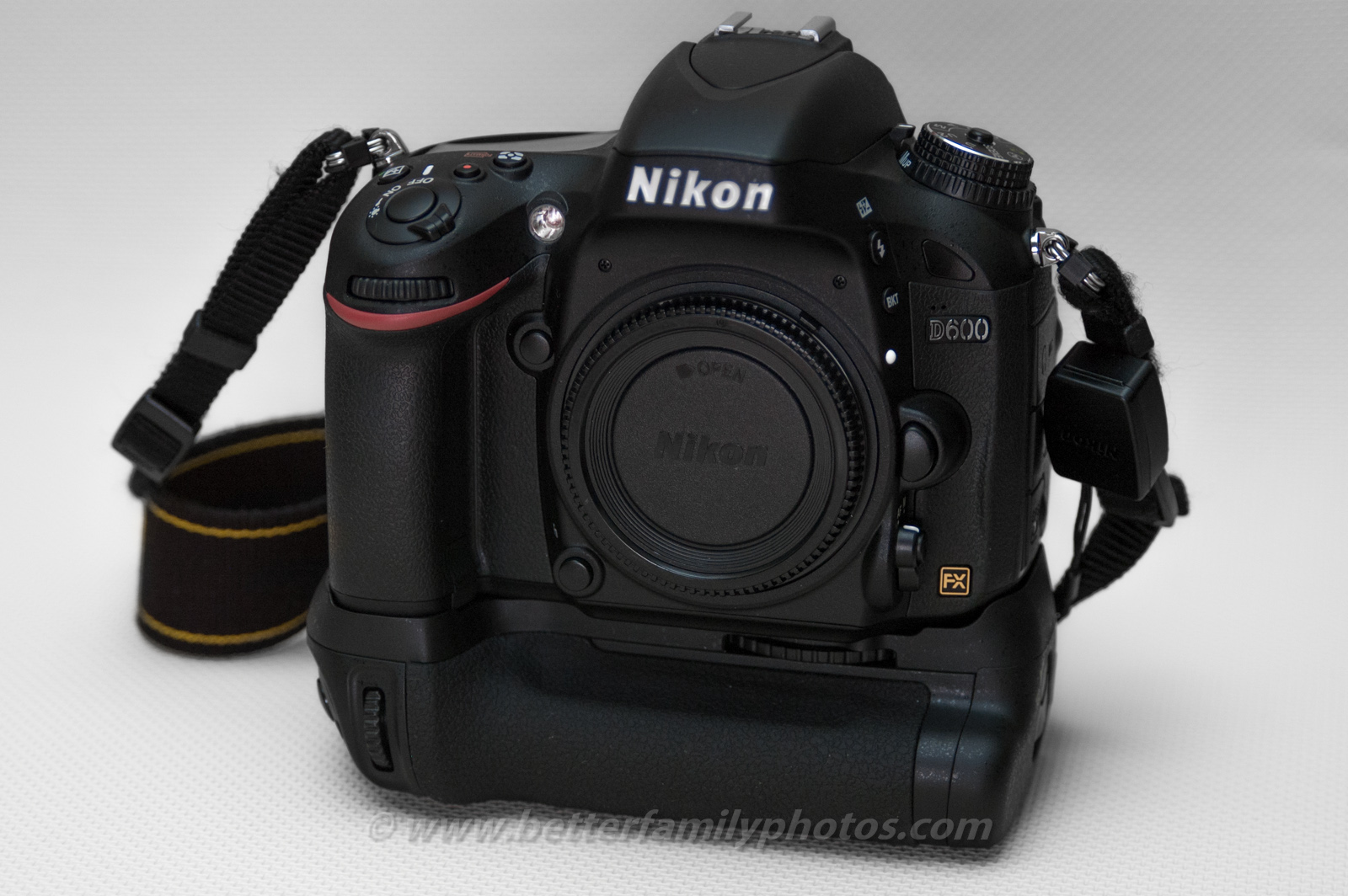
Cheap Battery Grip for Nikon D600 - First Impressions

Posted on 04:22 by Unknown
UPDATE: As of 12/29/12 my grip stopped working!  See below.  As of 1/6/13 it's working again.


I finally received the cheap battery grip that I ordered for my Nikon D600.  Here are my first impressions.

UPDATES: See under command dial -- missed clicks and direction of rotation.


ORDERING AND DELIVERY
I ordered this grip from eBay seller ukpartsdeal on November 7, 2012.  I hadn't gotten it and inquired with the seller who said he shipped it on November 15, 2012.  Coincidentally, I received it the day after I sent my inquiry, on November 26, 2012.

BOX
When I received the box, it was a little squished from handling.  There is no brand.  Most distressing was that the photo of the grip on the box shows a completely different grip, with the older-style protrusion that goes into the battery compartment.  However, there was a sticker saying "For Nik D600."

Inside was a bubble wrap with the grip -- no protrusion. Whew.  Contents:

  • Battery grip
  • Plastic cover for terminal contact (covering the terminal of course)
  • Battery holder for the EN-EL15
  • Battery holder for AA batteries
  • Manual in English and Simplified Chinese.  (Interestingly, from perusing the manual, the English seems perfect, not the usual English that looks like a machine translation.)

PLASTIC VS. MAGNESIUM
On eBay, there are two price points for a D600 aftermarket grip.  There is one that is around $50 and another that is around $130.  I ordered the $50 one, thinking the $130 was a rough deal.  However, I found out from the manual that there are two models of this grip: BG-2K (plastic) and BG-2M (magnesium alloy).  I am supposing that the more expensive grip is made of magnesium alloy.  If you're ordering that, you should check with the seller before completing your purchase.

PRODUCT VIEWS
Here is what the grip looks like


Here is how it looks when mounted on the D600.


BUILD QUALITY
My overall impression of the grip was that it felt cheap and light.  I would compare the build quality to one of those generic digital cameras sold at department stores for less than $100.  It doesn't look like it would fall apart but you can easily notice that it feels different from the D600.  The plastic used appears to be similar to some of the better Chinese flash triggers that I've used (e.g. Aokatec AK-TTL).  My impression is that it's suitable for normal use, but would probably suffer small cracks with rugged use over time.

INSTALLATION
The grip fits the D600 just fine.  On the bottom of the D600, I just removed the rubber cap covering the terminal (no tools needed).  I positioned the tripod insert on the tripod mount then turned the wheel.  The wheel can be held from both front and back of the grip making it easier to turn it.  There are a couple of short protrusions on the grip for corresponding holes on the D600 to ensure the grip is correctly oriented and positioned.
When the wheel is fully tightened the grip feels like it is securely mounted on the camera.  I don't feel worried about it suddenly falling off (knock on wood).  However, there is a slight but perceptible flex if you try to twist the grip away from the camera.

The grip follows the contours of the D600 fairly well.  I haven't handled the original MB-D14 battery grip but as far as I can tell from photos of the MB-D14, this grip seems to conform to the D600 just as well.

On a scale of 5, I would say the fit is 4 (because of the slight flexing).  I don't have any prior experience with battery grips, so I don't know how well original grips fit their respective cameras.

BATTERY HOLDERS
As noted above, the grip includes two battery holders.
Top

bottom
EN-EL15 holder with EN-EL15 battery

The holders have a latch that you lift up and twist to lock and release the holder from the grip.
Release position

Locked position
The AA battery holder fit the grip well while my EN-EL15 holder first needed a little persuasion before the latch would lock.  The EN-EL15 holder now locks and releases fine.

DOES IT WORK?
Yup. I tested these configurations:
D600 with EN-EL15 + Grip with AA batteries
D600 without EN-EL15 + Grip with EN-EL15
D600 without EN-EL15 + Grip with AA batteries
D600 with EN-EL15 + Grip with no battery --> camera works, grip doesn't.  I am supposing this is normal.

Note: I don't have a spare EN-EL15 battery to test the D600 with EN-EL15 plus the grip with EN-EL15.  I also haven't run down the EN-EL15 to see if it would transition to the AA batteries with no problems.  I'll update this post when I get to do that.

Vertical shutter.  The button has a smooth rather than matte finish (like that of the D600's shutter) and seems very slightly more elevated.  The travel from not pressed to half-pressed is about the same as the D600's shutter (other than the difference from the slight elevation) as is the travel from half-pressed to fully depressed .  The amount of pressure is also about the same.


Lock for the vertical shutter.  It's not a physical lock that prevents the shutter from being depressed.  Rather it appears to be some sort of electronic lock that disables the vertical shutter.

Front and rear command dials.  They feel like they are slightly less thick than the D600's dials but otherwise they work just fine.  The detents feel about the same as that of the D600, perhaps with slightly less resistance to turning.  One difference is that the D600's dials have a slightly rubbery texture that makes them less slippery.  The dials on the grip are just plain plastic.

UPDATE 1 - MISSED CLICKS: I found out that if you rotate the dials very quickly, one or more inputs can fail to register.  For example, if you rapidly rotate the dial 3 clicks (as quickly as you normally do 1 click), the change might only show 2 clicks.  By contrast, with the D600's dials, I can rotate them however fast I want and they will always show the correct number of clicks.

UPDATE 2 - DIRECTION OF ROTATION: Apparently some third party grips do not rotate in the same direction (see Bill's comment below).  On mine, they do turn in the same direction. I also tried the option to reverse the rotation and the dials reversed just the same way as the D600's own dials.


Joystick.  Works in all directions.  Feels a little squishy.  Pushing in the joystick works just like pressing the OK button on the D600 directional pad.


AF-ON Button.  Functions perfectly (function can be changed via option f9.  Texture feels the same as that of the AE-L button on the D600.  As with the vertical shutter, it feels slightly elevated compared to the D600's AE-L button but otherwise feels similar.  It feels more squishy than the D600's AE-L button but the overall amount of pressure required is about the same.

Rubber Grip.  The rubber on the grip has a different texture from that of the rubber grip on the D600.  However, it doesn't feel worse and may even feel slightly more grippy.

AC Adapter pass-through.  The EN-EL15 battery holder includes a rubber cover to allow an EH-5 and EP-5B AC adapter cord to pass through.


CONCLUSION
Overall my impression is that this grip works well for anyone who wants a battery grip either for the vertical controls, the extra battery capacity or the option to use AA batteries in an emergency, as long as you don't use it in rugged conditions and you're fine with missed clicks.  (For pros those issues are probably not acceptable.)  In my case I like the D600's compact size but most of the time I don't always need it to be so compact in which case I will probably keep the grip attached for extra protection for the D600.  I will update this review after I've had more time to use it.

12/29/12 UPDATE: Grip had been working fine then I removed it.  When I put it back, it stopped working!
http://betterfamilyphotos.blogspot.com/2012/12/warning-fake-d600-grip-stopped-working.html 
1/6/13 UPDATE: Tried the grip again and it's now working again.
Read More
Posted in 3rd party, aftermarket, battery, D600, ebay, grip, nikon, review, third party, vertical | No comments

Tuesday, 13 November 2012

Update on Nikon D600 Sensor Oil/Dust Spots Issue

Posted on 08:53 by Unknown

One of the few issues about the Nikon D600 is its propensity to get dust on its sensor.  It has been documented by Roger Cicala of LensRentals here.  In addition, some say the sensor gets oil (not just dust) on its sensor.  Roger did not notice any oil on the 20 units of the D600 that he examined, and I personally have not observed it.

Anyhow at around 2000 shots I noticed that there were spots on my shots, even at a not-so-narrow aperture of f/8.  I blogged about that here.  I thought the spots were oil based on the characteristics I observed but it turned out that the spots were only dust.

That was about a month ago.  I'm now at around 4500 shots, and although I haven't seen dust on my shots, I decided to reexamine the sensor.  Here's what I found.


I now have a lighted sensor loupe, so I took a look at the sensor.  To my relief, I did not see anything that looked like oil spots.  I only saw a few flecks of dust.  I blew them using a sensor cleaning blower but some of the spots remained.  I tried to take photos of the sensor but it was really challenging.  Here's what I was able to capture:


Other than that one spot, I couldn't see much.  (I was able to blow that one spot away using the sensor blower).

Meanwhile I decided I would take some narrow aperture test shots.  At first I took shots at f/22 and didn't notice anything.  I then changed to a Tamron 70-300 VC which can go to as narrow as f/32 then I took a shot:


In Lightroom, I maximized the contrast to make the dust spots easier to see.

Click for higher-resolution versions of the shots.  It's a lot dustier than what I could see from the sensor loupe, but I'm not very worried because they aren't showing up on my shots.

ACTUAL EXAMPLES OF OIL
Sometimes, dust exhibits the characteristics of oil (see here) therefore dust can be mistaken for oil.  The following are definite indicators of oil:

1. Visible oil on sensor.  See this photo:
http://www.talkphotography.co.uk/forums/showthread.php?t=433703

2. Rings on test shots (dark outside, light inside).  If there is a ring but it is light outside and dark in the middle, the ring could just be a halo from excessive postprocessing (sharpening, clarity, contrast, etc.).
Example on D800 photo (scroll down):
http://nikonrumors.com/forum/topic.php?id=5517&page=7
Photos of REAL oil spots - courtesy of Canon.

Link 1: http://www.usa.canon.com/cusa/support/consumer?pageKeyCode=prdAdvDetail&docId=0901e0248013d2ea
Link 2: http://cpn.canon-europe.com/content/news/EOS_oil_spots.do

Note: the spots on my sensor don't seem to have donut-like rings like the ones shown on Canon's site.

3. If you physically attempt to wipe the dust and it smears.
WARNING: physical contact with the sensor or AA filter will void your Nikon warranty

11/16/12 UPDATE:  I just want to pose a question for readers: this issue about the D600 is very widely known.  And there is clear evidence of DUST.  However, even the issue about spots is very widely known and there's so much interest and discussion about it, why is it that there is still no unmistakable evidence of OIL (i.e. photos of actual oil spots on sensor/lowpass filter, or donut-shaped rings on photos, or smeared oil)?  There is evidence of oil on some other cameras (see examples) but I haven't seen any such evidence for the D600. Could it be that people are mistaking spots for oil?  Just something to think about.

RELATED POSTS:
Nikon D600 Resource Page (see under "Dust Spots")
Firefly DSC-2000 Review
Read More
Posted in D600, dust, nikon, oil, sensor, spots | No comments
Older Posts Home
Subscribe to: Posts (Atom)

Popular Posts

  • Nikon 28 1.8G: Moody Artist?
    When Nikon had its recently-finished sale (now extended to end of March), the one lens that I considered buying was the Nikkor 28 1.8G.  To...
  • Samyang 24 f/3.5 Tilt Shift Lens Now Available
    A seller on ebay ( bestpriceoptics ) is now selling the Samyang 24 f/3.5 tilt shift lens, in Canon and Nikon mounts, for $999 shipped.  This...
  • Double Camera Strap & BlackRapid RS-5 Review
    This is a review of two camera straps: - The first is a double camera strap that's -- let's be blunt -- a knockoff of the BlackRapid...
  • Olympus E-PL3 with 14-42 Lens $199; Moving from Nikon to MFT?
    I saw on 43rumors.com that the Olympus E-PL3 was being sold at Newegg for just $199 with the 14-42 kit lens included.  I checked it out and...
  • Price drops!!! Olympus XZ-2, Pentax MX-1. And about the Casio EX-10
    I just noticed a huge price drop on the Olympus XZ-2 (previously $500 now under $400) and Pentax MX-1 (previously $500 now under $300 ).  Pe...
  • Abstract Fun
    In one of the rare times I put effort and setup a light stand and an umbrella to shoot my girls, I decided to make use of this burst of ener...
  • Best Alternative to Nikon 24-70 2.8G: the Nikon 28-70 2.8D
    Every Nikon shooter knows that the Nikkor 24-70 2.8G is the best standard zoom for Nikon's full frame cameras.  However, at around $1900...
  • Coco Ring Flash - First Impressions
    A few weeks ago, after much deliberation, I finally decided to get a ring flash adapter.  My purpose was to use it as on-axis fill, much lik...
  • Sigma 18-35 1.8 Revisited; Where to Get It
    Back in April of this year, Sigma surprised everyone by announcing the Sigma 18-35 f/1.8 , the first zoom lens for a large sensor that had s...
  • Toys for the Big Kids: Speedlight Softbox
    In this post, we will have a look at a softbox for speedlights.  This post is part of a series that will cover equipment reviews for committ...

Categories

  • "alien bee"
  • "april fool's"
  • "ring flash"
  • "yong nuo"
  • 1"
  • 1/1.7"
  • 10-17
  • 10-20
  • 11-16
  • 15-85mm
  • 15z
  • 17-50 vc
  • 190cx pro3
  • 2.8
  • 2.8G
  • 2/3"
  • 200 f2.8
  • 200 L
  • 200mm
  • 200mm f/2.8
  • 200mm f/2.8 L II
  • 200mm f2.8
  • 200mm f28
  • 200mm f28 L II
  • 2012
  • 2013
  • 23 Samsung led
  • 24-105 f4
  • 24-70
  • 25 1.4
  • 28-105
  • 28-70
  • 35mm
  • 35mm f/2
  • 35mm f2
  • 360
  • 3rd party
  • 4.1
  • 4/3
  • 40 pancake
  • 40 panckae
  • 40 stm
  • 40-150R
  • 40mm f/2.8
  • 430EX
  • 43rumors
  • 45 18
  • 45 AW
  • 4x4
  • 50 14
  • 50 f14
  • 50-150
  • 50mm
  • 50mm f/1.4
  • 55 AW
  • 55-250
  • 550D
  • 55aw
  • 560ex
  • 580 ex ii
  • 580EX
  • 580EX II
  • 5d
  • 5d mark 2
  • 5d mark 3
  • 5D Mark II
  • 5d mark iii
  • 5d2
  • 600d
  • 600ex-rt
  • 60d
  • 60fps
  • 60mm macro
  • 650d
  • 6d
  • 7.5mm
  • 720p
  • 75 f1.8
  • 85mm f1.8
  • 8x12
  • abbc
  • abstract
  • accuracy
  • active d-lighting
  • adjustment
  • adl
  • AF
  • af point
  • AF Point Expansion
  • aftermarket
  • airport
  • alexandria
  • alien bee
  • alien bees
  • alienbee
  • alienbees
  • alternative
  • ambient
  • ambient light
  • angle
  • aperture priority
  • APS-C
  • apsc
  • assignment
  • auto focus
  • auto white balance
  • autofocus
  • AWB
  • awl
  • back button focus
  • background
  • background blur
  • backlight
  • backlighting
  • backlit
  • bad behavior
  • bad photography
  • balance
  • bare flash
  • battery
  • BBF
  • beach
  • beams
  • beauty dish
  • bellagio
  • BFT
  • birthday
  • black
  • black foamie thing
  • black rapid
  • blackrapid
  • blogs
  • blower
  • blown
  • blur
  • bokeh
  • bounce
  • bounce card
  • bounce flash
  • bower
  • bracket
  • brightness
  • brilliance
  • brolly grip
  • brother
  • build
  • burst mode
  • butterflies
  • butterfly
  • C.Fn
  • cable
  • cake
  • camera
  • camera bag
  • camera releases
  • camera settings
  • candle
  • candlelight
  • canon
  • Canon 100mm Macro L IS
  • canon 200mm f28L
  • canon 24-105
  • canon 40 stm
  • canon 40mm f28 pancake
  • canon 50
  • canon 50 1.4
  • canon 55-250
  • canon 5d mark 2
  • canon 5d mark ii
  • canon 5d mark iii
  • canon 5d2
  • canon 5d3
  • Canon 60d
  • canon 6d
  • canon g11
  • canon speedlite
  • car
  • carbon fiber
  • catch lights
  • cheap
  • christmas
  • clean
  • cleaning
  • clipped
  • clipping
  • close up
  • clouds
  • cls
  • clustered
  • color
  • compact
  • comparison
  • composition
  • compositional aid
  • construction
  • contrast
  • cooler master
  • copyright
  • core i7
  • cowboy
  • cowboystudio
  • cpl
  • creepy
  • crop factor
  • crop sensor
  • cyber commander
  • cybersync
  • d-lux
  • d-lux5
  • d3
  • d300
  • D5100
  • D600
  • d70
  • d700
  • D7100
  • d90
  • dark background
  • david hobby
  • daylight
  • dell 24 inch
  • depth of field
  • desert
  • diamond
  • digital
  • directional
  • distance
  • diy
  • dlux
  • dlux5
  • dng
  • double
  • dslr
  • DSLR bag
  • dual
  • dust
  • dx
  • dynamic range
  • earthquake
  • ebay
  • ebay trigger
  • eclipse
  • editing
  • EF 40mm f/2.8
  • ef-s 60mm
  • einstein
  • Electro GN
  • engagement
  • environmental portrait
  • ep5
  • equipment
  • ETTL
  • ettr
  • europe
  • events
  • evf
  • ex600
  • existing light
  • expensive
  • exposing to the right
  • exposure
  • f/3.5
  • family
  • faq
  • fasten-r3
  • favorite
  • fayoum
  • Fayoum desert
  • fill
  • fill light
  • film
  • filter
  • finepix
  • fire
  • fireplace
  • first impressions
  • fish-eye
  • fisheye
  • fix
  • FL600R
  • flash
  • flash bounce
  • flash sync
  • flash trigger
  • flashmeter
  • flashright
  • focal length
  • focus
  • food
  • football
  • fotodiox
  • fountain
  • freexwire
  • fuji
  • fujifilm
  • Full Frame
  • fun
  • fx
  • galaxy s 3
  • galaxy s4
  • gecko
  • GeForce gtx570 OC
  • gel
  • geomag
  • ggs
  • ghost
  • gigabyte z77 ud3h
  • glass
  • gn
  • Goodbye
  • gorillapod
  • gregg
  • grid
  • grip
  • group shot
  • gskill ripjaws
  • guide
  • guide number
  • gx7
  • haf 912
  • handheld
  • hands on
  • hands-on
  • hdr
  • head shot
  • hiatus
  • high dynamic range
  • high iso
  • high speed sync
  • highlight
  • highlights
  • histogram
  • holder
  • holiday
  • home
  • home made
  • Honda civic
  • honeycomb
  • hotshoe
  • hoya
  • humor
  • i9500
  • id
  • image quality
  • impressions
  • indoor flash
  • infrared
  • infringement
  • insects
  • inverse square law
  • japan
  • jewel
  • jewelry
  • joby head
  • jpeg
  • Kingston hyperX SSD
  • kirk tuck
  • kl bird park
  • krakow
  • kuala lumpur
  • las vegas
  • lastolite
  • laurence kim
  • lax
  • lcd
  • leica
  • lens
  • lens cap
  • lens compression
  • lens review
  • lenses
  • lenspen
  • lensrentals
  • light
  • light painting
  • lighting
  • lightroom
  • lightroom 4
  • lightroom 5
  • location
  • long
  • long exposure
  • los angeles
  • low key
  • low light
  • Lowepro
  • Lowepro 45aw
  • Lowepro 55aw
  • lr4
  • lumiquest softbox III
  • lumix
  • lx-5
  • lx5
  • m4/3
  • m43
  • macro
  • macro adapter
  • makernotes
  • malaysia
  • manfrotto
  • manfrotto tripod
  • manual
  • mark ii
  • mark iii
  • MFT
  • mft. micro four thirds
  • micro four thirds
  • mielec
  • migration
  • mini review
  • mirror
  • mirror-less
  • mirrorless
  • mobile
  • modification
  • modifier
  • monobloc
  • monoblock
  • monolight
  • motion
  • motion blur
  • multi function printer
  • multiple
  • nano crystal
  • natural light
  • neil
  • Neil VN
  • niekerk
  • nikkor
  • nikon
  • nikon d600
  • noise
  • off camera
  • oil
  • olympus
  • olympus 12-50
  • Olympus 40-150
  • olympus 45
  • olympus 45 18
  • olympus om-d em-5
  • om-d
  • omd
  • omd em1
  • omd em5
  • omd em6
  • on-camera
  • one inch
  • overexposure
  • overpowering sun
  • panasonic
  • panasonic leica 25 14
  • pancake
  • party
  • passport
  • pastries
  • pastry
  • pc
  • pentax
  • peter
  • phone
  • phone photography
  • photo
  • photo tips
  • photography
  • photokina
  • photomerge
  • photoshop
  • photoshop elements
  • planning
  • pocketwizard
  • point and shoot
  • poland
  • polarizer
  • popup
  • popup flash
  • portrait
  • post processing
  • post-processing
  • postprocessing
  • product
  • product shots
  • profile
  • protection
  • protector
  • quad-flash
  • quantum
  • radiopopper
  • raid 0
  • Range finder
  • raw
  • raw editing
  • raw+jpeg
  • rays
  • real
  • recovery
  • reflection
  • reflector
  • resources
  • restaurant
  • review
  • rf-603
  • rf603
  • ricoh
  • ring
  • ringflash
  • robin wong
  • roger cicala
  • rogue
  • rokinon
  • roll off
  • roll-off
  • rolloff
  • rs-5
  • rs-7
  • rumors
  • s5
  • s5 pro
  • s5pro
  • samples
  • samsung
  • samyang
  • sb-26
  • sb-80
  • sb26
  • sb800
  • screen protector
  • sensor
  • sensor swab
  • sensorclear
  • sensorklean
  • sensorklear
  • separation
  • shadow
  • shadow pulling
  • shadows
  • shards
  • sharpening
  • sharpness
  • shoot through
  • shoot-through
  • shoot-thru
  • shooting technique
  • shootout
  • short
  • sigma
  • sigma 50-150
  • skin tones
  • skylight
  • Slik Mini Tripod
  • slingshot
  • slow
  • small
  • smooth
  • soft
  • softbox
  • sony
  • sony a99
  • sony rx100
  • sony t10
  • specular
  • speed
  • speedlight
  • speedlite
  • spinlight
  • spots
  • standard
  • stockholm
  • story
  • strap
  • strobe
  • strobist
  • studio
  • studio strobe
  • subject
  • substitute
  • sudden
  • summilux
  • sunrise
  • sunset
  • sweden
  • swivel
  • sync speed
  • t2i
  • t3i
  • Table top tripod
  • tamron
  • technique
  • techniques
  • tele
  • telephoto
  • thinktank retrospective 5
  • third party
  • tips
  • tokina
  • tonal
  • tonality
  • tone curve
  • toploader
  • toys
  • translucent
  • travel photography
  • tri-flash
  • Tribute
  • trifold
  • trigger
  • tripod
  • truth
  • ttl
  • TTL Cord
  • u43
  • ultra-wide
  • ultrawide
  • umbrella
  • underexposure
  • unlimited sync speed
  • up-rise
  • up-rise 15z
  • update
  • uprise
  • USM
  • uv
  • uwa
  • vanguard
  • versus
  • vertical
  • video
  • view nx2
  • visual science lab
  • vs
  • wadi rayan
  • wd caviar black
  • web
  • weekend
  • westin
  • white balance
  • white lightning
  • wide
  • wide angle
  • window
  • wireless
  • wireless flash
  • wireless release
  • wireless trigger
  • workflow
  • Yashica
  • yashica gtn
  • yashica st-7
  • yn-560
  • yn-560ex
  • yn-ex600
  • yn560
  • yong nuo
  • yongnuo
  • zack arias
  • zoom
  • zoom toploader
  • zuiko

Blog Archive

  • ▼  2013 (165)
    • ▼  December (5)
      • Olympus E-PL3 with 14-42 Lens $199; Moving from Ni...
      • Sigma 18-35 1.8 Revisited; Where to Get It
      • Speedlight Modifiers - 50% discount at Fotodiox
      • Olympus M.Zuiko 45mm f/1.8 Mini Review
      • Evening Portraits with Flash
    • ►  November (10)
    • ►  October (8)
    • ►  September (7)
    • ►  August (3)
    • ►  July (11)
    • ►  June (10)
    • ►  May (15)
    • ►  April (19)
    • ►  March (33)
    • ►  February (24)
    • ►  January (20)
  • ►  2012 (193)
    • ►  December (17)
    • ►  November (22)
    • ►  October (34)
    • ►  September (47)
    • ►  August (12)
    • ►  July (11)
    • ►  June (10)
    • ►  May (13)
    • ►  April (13)
    • ►  March (8)
    • ►  February (1)
    • ►  January (5)
  • ►  2011 (141)
    • ►  December (8)
    • ►  November (8)
    • ►  October (7)
    • ►  September (9)
    • ►  August (13)
    • ►  July (13)
    • ►  June (19)
    • ►  May (17)
    • ►  April (25)
    • ►  March (22)
Powered by Blogger.

About Me

Unknown
View my complete profile